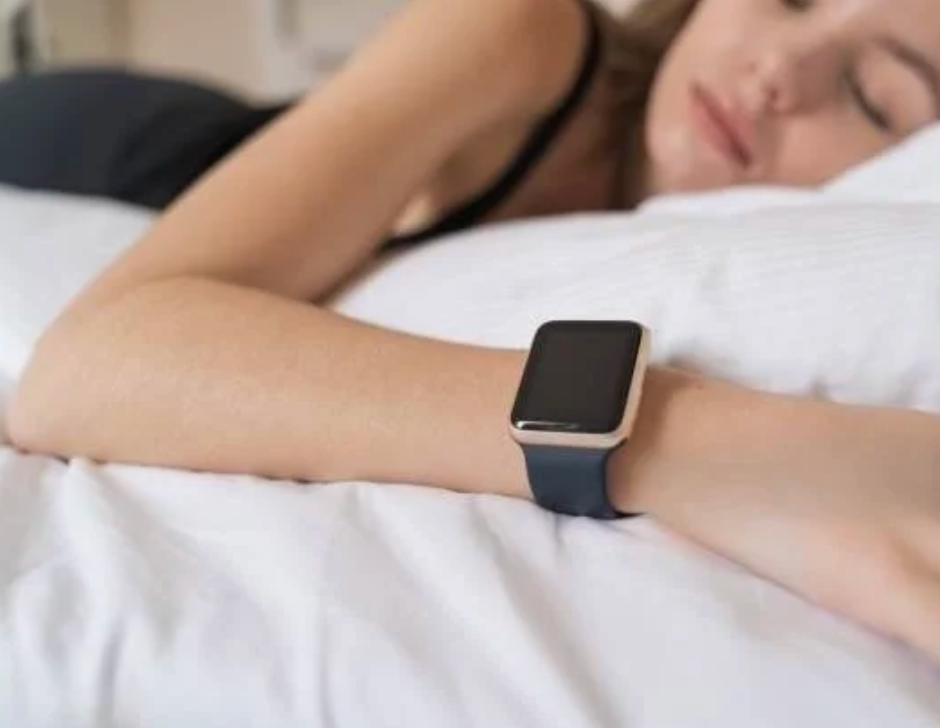
Do You Really Need a Sleep Tracker? A Critical Look
Key Points
Inconsistent Accuracy: Consumer sleep trackers have mixed accuracy, often failing to provide reliable data on sleep stages or quality.
Potential for Nocebo Effect: Relying on sleep trackers may inadvertently cause users to believe they have poor sleep quality, even if they feel rested, which can negatively impact their well-being.
Not Necessary for Health Improvement: While some may find them useful, sleep trackers are not essential for improving sleep quality and may even create unnecessary anxiety.
Use with Caution: If used, these devices are best seen as tools for general awareness rather than for detailed analysis.
Introduction:
I’m not a big jewelry guy, so it might not some as any surprise I don’t have a Whoop, or any other wearable tracker. However, recently I have noticed that a good percentage of my clients and friends have began using them in an attempt to use sleep data to help maximize recovery, increase performance, and live longer. It seems that sleep trackers are more popular than ever, with many people relying on them to track sleep stages, monitor quality, and promote better habits. However, despite their wide use, and claims made by the manufacturers, the actual benefits of these devices are debatable. In my experience as a coach and trainer, I don’t see sleep trackers as necessary tools for improving sleep quality. In fact, their limited accuracy and potential for creating a nocebo effect—a belief that one’s sleep is poor, which could make sleep feel less restorative—make me hesitant to recommend them to clients. This post reviews the available research to assess how effective these devices are and why I ultimately view them as more of a potential source of anxiety than a tool for health.
What The Science Says About Sleep Trackers
You may call me a hater, and that’s fair, I am one, but I also did my homework to defend my hate. Several studies reveal important limitations of sleep trackers. Reifman (2023) conducted a systematic review and found that while sleep trackers are good at estimating total sleep time, they often struggle to match clinical-grade measurements. While they can track general patterns, their reliability drops when it comes to identifying specific sleep stages, meaning they can lead to misinterpretation of sleep quality (1).
A study published in JMIR mHealth and uHealth, by Lee et al. (2023) found much the same, which evaluated eleven wearable sleep tracking devices. Lee found that although some devices accurately estimate general sleep duration, most struggle with consistent stage differentiation, limiting their utility for anything beyond broad tracking (2).
And while devices can be reasonably reliable for broad sleep stages, again found in a 2020 study from Mouritzen et al. which assessed the Garmin Vivosmart 4’s accuracy, the product was inaccurate in capturing fine details, which are more important for applicable user data (3). Similarly, Ameen et al. (2019) highlighted that sleep apps and devices lack reliability compared to clinical tools. And while that is hardly surprising, it may lead to misleading conclusions for users (4).
Lastly, Lee et al. (2018) found that while wearables could effectively track total sleep duration, they struggle with detecting specific sleep stages or qualitative aspects (5). Their findings suggest that while these devices might capture trends, they aren’t well-equipped for detailed nightly breakdowns, which kind of makes me wonder what is even the point.
Analysis
The methods used in the studies on sleep tracker accuracy reveal both strengths and limitations in assessing these popular devices. Most of the studies reviewed were observational in nature, examining real-world usage of sleep trackers across different brands and models. This observational approach provides a broad view of how these devices perform in practical settings, making the findings relevant to consumers. However, without controlled conditions, the results can be less robust. Randomized controlled trials (RCTs), which are the gold standard in clinical research, were largely absent in this body of work, limiting the reliability of findings. The lack of direct comparisons to polysomnography (PSG), the clinical standard for sleep measurement, is another methodological gap, as PSG is essential to benchmark and understand the true accuracy of these devices. Without this comparison, it’s challenging to quantify the accuracy trade-offs users might be making for the sake of convenience.
The studies highlight several pros and cons. On the positive side, many devices appear to accurately track total sleep duration and general trends, which can be beneficial for users simply wanting a broad sense of their sleep patterns. Additionally, the variety of devices tested across studies gives insight into performance variability among popular models, suggesting that while some brands may be better suited for general tracking, others might not meet even the basic requirements for accurate sleep duration measurement. However, a notable downside is the inconsistency in how sleep stages are reported. These inaccuracies could lead to misinterpretation by users who may take these readings as definitive, rather than as rough estimates. This discrepancy becomes a significant drawback for people seeking detailed data or those with sleep issues who might rely on these devices to guide health decisions.
Looking ahead, future research could address the methodological gaps by incorporating more rigorous study designs. RCTs comparing various sleep tracker brands with PSG data would provide stronger, more reliable insights into the accuracy of these devices. Additionally, establishing standardized metrics and evaluation protocols could help address the variability across studies and allow for more consistent comparisons between devices. Another promising area for future research is exploring the impact of sleep trackers on user psychology, particularly the potential nocebo effect. Researchers could investigate how users’ perceptions of their sleep quality change based on device feedback and whether this feedback influences their well-being, regardless of actual sleep patterns. As consumer interest in sleep tracking grows, more detailed, clinically-informed studies would help guide best practices for device use, ensuring that consumers receive the most accurate and meaningful insights possible.
Interpretation
Good training, whether for fitness or health, is all about separating signal from noise—knowing which data is useful and what’s just distracting information. In this context, the data from sleep trackers often seems to lean more toward noise than signal. In my experience, most people already have a general sense of how much sleep they got and whether or not they feel rested. A sleep tracker, with its detailed but often inaccurate metrics, can complicate this intuitive understanding, turning a simple concept into something to worry about. Instead of helping users make meaningful changes, sleep trackers can add unnecessary stress, especially if the data doesn’t align with how the person actually feels.
For those who find value in sleep trackers and feel motivated or reassured by the data, that’s perfectly fine—different tools work for different people, and if it benefits you, then by all means, use it. But personally, I don’t see a real advantage in recommending these devices to clients. In most cases, they don’t offer insight beyond what someone already knows from tuning into their body. Ultimately, the key to good sleep lies in addressing quality habits and consistent routines rather than relying on technology that may add more noise than clarity.
Practical Takeaways
When it comes to improving sleep, trusting how you feel may be more effective than obsessing over data from a sleep tracker. If you wake up feeling rested and alert, that’s often a better indicator of good sleep than any digital reading. Sleep trackers can sometimes complicate this simplicity, as daily data can lead to overthinking rather than meaningful improvement. Rather than scrutinizing nightly variations, it’s better to focus on general trends if you do use a tracker. For anyone concerned about sleep quality or experiencing ongoing sleep issues, consulting a healthcare provider is a more reliable path than interpreting device-generated data.
Simple changes in sleep hygiene can be more impactful than any technology. Practices such as setting a consistent bedtime, limiting screen time before bed, and creating a relaxing evening routine are all proven methods to enhance sleep quality. While sleep trackers may provide motivation for some, they’re not essential to better sleep. In fact, if the data makes you anxious or leaves you second-guessing how you feel, it might be more beneficial to skip the tracker altogether and focus on building a sustainable, intuitive sleep routine. Ultimately, improving sleep doesn’t require a device to monitor it—sometimes, it’s better to listen to your body.
Conclusion
While sleep trackers can offer some insight into general sleep patterns, they aren’t as beneficial as they may seem. In my opinion, the data they provide is often unreliable, and their potential to induce a nocebo effect can outweigh their practical benefits. Rather than relying on technology to tell us how well we slept, it’s often more effective to focus on feeling rested and alert. For those who genuinely benefit from using sleep trackers, there’s no harm in continuing. However, for those considering them as a solution for improving sleep, I don’t see them as necessary or particularly helpful.
Sources:
Reifman, J., Vital-Lopez, F., & Priezjev, N. V. (2023). Commercial sleep tracker devices offer insights but vary in accuracy. SLEEP. DOI: 10.1093/sleep/zsad077.0194
Lee, T., Cho, Y., Cha, K. S., & others (2023). Accuracy of 11 Wearable, Nearable, and Airable Trackers. JMIR mHealth and uHealth. DOI: 10.2196/50983
Mouritzen, N. J., Larsen, L. H., Lauritzen, M. H., & others (2020). Assessing the performance of a commercial multi-sensor sleep tracker. PLoS ONE. DOI: 10.1371/journal.pone.0243214
Ameen, M., Cheung, L., Hauser, T., & others (2019). About the Accuracy and Problems of Consumer Devices. Sensors (Basel). DOI: 10.3390/s19194160
Lee, J. M., Byun, W., Keill, A., & others (2018). Comparison of Wearable Trackers’ Ability to Estimate Sleep Patterns. International Journal of Environmental Research and Public Health. DOI: 10.3390/ijerph15061265
DISCLAIMER
The information in this article is for educational and informational purposes only and is not intended as medical advice, diagnosis, or treatment. Always consult with a qualified healthcare provider or medical professional before beginning any new exercise, rehabilitation, or health program, especially if you have existing injuries or medical conditions. The assessments and training strategies discussed are general in nature and may not be appropriate for every individual. At Verro, we strive to provide personalized guidance based on each client’s unique needs and circumstances.