The Best Strength Training Exercises for Runners (With Sample Programs)
Key Points
Improve Running Economy and Efficiency: Strength training, particularly through power, stability, and endurance work, helps runners maintain a more efficient stride, reducing energy expenditure over long distances.
Prevent Common Running Injuries: Targeted exercises like directed calf and tibialis training, as well as isometric stability work, help prevent overuse injuries such as shin splints, IT band syndrome, and Achilles tendinitis by strengthening key muscle groups and improving joint stability.
Enhance Power and Speed: Power training (e.g., cleans, snatches, kettlebell swings) improves the ability to generate force quickly, which translates to better acceleration, improved sprinting, and more powerful hill runs.
Build Muscular Endurance: Strengthening muscles with endurance-focused exercises helps runners maintain form and delay fatigue over long distances, allowing for better performance during extended efforts.
Customized Strength Programs for all Levels: Whether training once, twice, or three times per week, runners can personalize their strength training routine with exercises and rep ranges that best target their individual needs, weaknesses, and goals.
Introduction:
I have a confession to make: I hate running. To be honest, I barely tolerate walking. Personally lifting heavy weights for as few reps and sets as possible to get as big and jacked as possible. However in this and in many other aspects of life, I am not normal, and I’ve been told by a lot of my clients that they seem to enjoy torturing themselves with running regularly. As a result, I’ve had to become skilled at programming to help them get better at running—improving their performance while keeping them injury-free.
For runners, strength training isn't about transforming into a bodybuilder. It's about building a body that can handle the high impact and repetitive stress of running while performing efficiently. Scientific research has shown that incorporating strength training into a running program can improve running economy—the energy cost of running at a given speed—by as much as 4-8%. That might sound like a small number, but it can be the difference between hitting a personal best or plateauing.
Moreover, strength training helps address muscle imbalances that are almost inevitable for runners. Repetitive movement patterns can lead to overuse injuries like IT band syndrome, Achilles tendinitis, and shin splints. A well-designed strength program builds resilience into key muscle groups like the glutes, hamstrings, and calves, making these injuries far less likely. For example, research has shown that strengthening the hip and core muscles can significantly reduce the risk of knee injuries in runners.
For those who want to go beyond injury prevention, strength training can also be a direct ticket to improved speed and power. Power exercises and heavy lifting have been shown to enhance muscle power and explosiveness, translating into a stronger push-off phase during running. This is particularly valuable for runners aiming to improve their performance over shorter distances or incorporate sprint intervals into their training.
Ultimately, I want runners to understand that strength training isn't a trade-off—it’s a complement to their running. With the right approach, lifting weights can help them run more efficiently, recover faster, and enjoy a longer, healthier running career.
Scientific Evidence in Support of Strength Training For Runners
The scientific community has extensively researched the effects of strength training on running performance, and the consensus is clear: incorporating resistance training into a runner’s program offers significant benefits. Here’s a closer look at what the research shows:
Running Economy: Running economy, often described as the "miles per gallon" for runners, improves with strength training. Research indicates that runners who engage in resistance exercises experience a reduction in the oxygen cost of running, allowing them to maintain a given pace with less effort. For instance, a study published in The Journal of Strength and Conditioning Research found that runners who incorporated heavy strength training (3-5 sets of 4-10 reps) improved their running economy by 4.6% over an 8-week period (1). Another study in Sports Medicine highlighted that plyometric training could enhance running economy by 2-6% in distance runners (2).
Injury Prevention: Strength training plays a crucial role in preventing injuries by addressing common muscle imbalances and improving joint stability. A review in The American Journal of Sports Medicine concluded that hip and core strengthening exercises reduced the incidence of patellofemoral pain syndrome in runners by up to 50% (3). Similarly, research published in British Journal of Sports Medicine demonstrated that runners who included resistance training were significantly less likely to suffer from injuries like shin splints and Achilles tendinitis (4).
Power Development and Stride Efficiency: Strength training, particularly when it involves exercises that improve the stiffness of the leg muscles and tendons, enhances the power output during running. This translates into a more forceful push-off with each stride, which can improve speed. A study in The Scandinavian Journal of Medicine & Science in Sports showed that combining traditional resistance training with power exercises led to better sprint performance in middle-distance runners over 10 weeks (5).
Muscular Endurance: Beyond power, strength training helps to build muscular endurance, which is essential for long-distance running. Resistance exercises help the body better tolerate the repetitive strain of running, maintaining muscle function longer before fatigue sets in. A study in Medicine & Science in Sports & Exercise found that runners who engaged in strength training had improved time to exhaustion during a treadmill run, indicating enhanced muscular endurance (6).
So, there is a good deal of evidence in support of resistance training for runners for several key reasons. With better running economy, a lower risk of injury, enhanced power, and greater endurance, runners who include weights in their training toolbox set themselves up for success, whether they’re aiming for a marathon PR or simply trying to enjoy more pain-free miles.
Practical Applications
I recommend programming in a way that emphasizes focusing on functional movements that target key muscle groups most essential to running performance. I’ve created a tiered approach organizes exercises based on their direct impact on improving a runner's strength, power, endurance, and injury prevention. The highest-tier exercises are the most effective and should be prioritized in any strength training program, while the lower-tier exercises provide additional benefits but aren't as crucial for direct running performance. This structure allows runners to tailor their routines based on time, goals, and individual needs, ensuring they’re getting the most out of each training session.
Tier 1: Essential Exercises
Deadlifts (Conventional, Sumo, Trap Bar)
Pros: Builds total-body strength with a focus on the posterior chain (hamstrings, glutes, and lower back), which is crucial for maintaining good posture and power during running. Being a bilateral movement, it provides symmetrical strength development, which can improve overall stability and reduce the risk of imbalances.
Cons: Requires proper form and technique to avoid injury, particularly to the lower back. Access to a barbell is necessary for most variations.
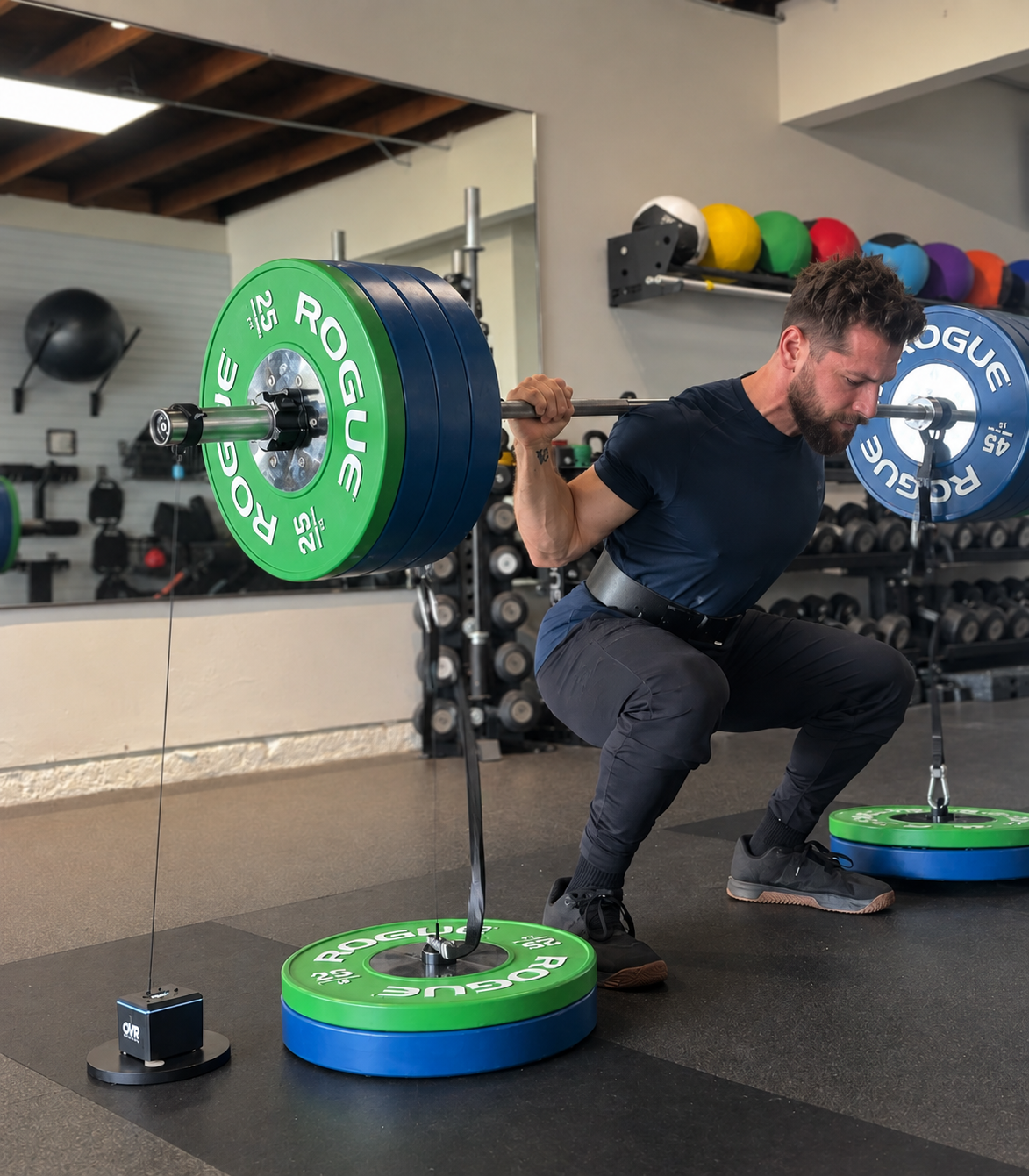
Squats (Front, Back, Goblet)
Pros: Improves leg strength, particularly in the quads and glutes, enhancing the ability to maintain good running mechanics. As a bilateral exercise, squats help build power and stability evenly across both legs.
Cons: Requires attention to form to avoid knee and lower back strain. Back squats, in particular, require proper technique and may not be suitable for beginners without supervision.
Tier 2: Highly Recommended
Directed Calf Work (e.g. Calf Raises)
Pros: Strengthens the Achilles tendon and surrounding muscles, reducing the risk of common calf and Achilles injuries in runners. Enhances the force generated during the push-off phase, contributing to a more powerful and efficient stride. Helps improve ankle stability, crucial for running on uneven surfaces and maintaining balance during long runs. Supports better muscular endurance in the lower legs, reducing the risk of fatigue and cramping during long-distance runs.
Cons: Directed calf training can take time away from other key muscle groups that may have a more significant impact on overall running performance. Since the calves are already heavily involved in running, additional isolated calf work can lead to overtraining or overuse injuries if not balanced with recovery. Runners who already have strong calves or perform compound lower-body movements may see diminishing returns from additional calf isolation work.
Unilateral Squat Patterns (e.g., Bulgarian Split Squats, Step-Ups)
Pros: Addresses imbalances between legs and enhances hip stability, which is critical for runners who need a strong stride. Unilateral movements also improve balance and coordination.
Cons: Requires more balance and coordination than bilateral exercises, making them challenging for beginners. Usually limited in the amount of weight that can be used, which may slow strength gains.
Unilateral Hinge Patterns (e.g., Single-Leg Deadlifts, Split-Stance RDLs)
Pros: Improves balance and control, targeting the hamstrings and glutes while reducing injury risk. Ideal for runners to develop stability during single-leg push-off phases.
Cons: Can be challenging for beginners to balance and control, limiting the weight used.
Leg Isolation (e.g., Leg Extensions, Leg Curls - Nordic and Seated)
Pros: Target specific muscle groups like the quads and hamstrings, helping to build resilience in areas that are prone to overuse injuries. Great for addressing specific muscle weaknesses.
Cons: Not as effective for developing overall movement patterns. May require machines or specialized equipment.
Tier 3: Optional but Beneficial
Tibialis Training (Reverse Calf Raises)
Pros: Strengthens the tibialis anterior, which helps prevent common running injuries like shin splints and stress fractures by reducing impact forces on the lower leg. Enhances ankle dorsiflexion, improving foot strike and promoting better running form, especially for runners transitioning to a forefoot or midfoot strike. Supports overall ankle and foot stability, which is important for running on uneven terrain and during agility movements. Stronger tibialis muscles can help reduce fatigue in the lower legs, allowing for better control during long-distance runs.
Cons: Not all runners may experience significant benefits from isolated tibialis training if they already have strong lower legs from running or other compound movements. Like with calf training, excessive tibialis work can lead to overuse injuries if not balanced with adequate recovery, particularly because running already heavily involves these muscles. Tibialis training can take away from other key exercises, especially if runners are already pressed for time in their strength training routines.
Rotational Work (e.g., Landmine Rotations, Russian Twists)
Pros: Strengthens the core and improves rotational stability, which is crucial for maintaining balance during running.
Cons: Focuses on core strength but doesn’t contribute directly to leg power. May require access to specific equipment like a landmine attachment.
Power Work (e.g., Box Jumps, Snatches, Cleans, Kettlebell Swings)
Pros: Enhances explosive power, contributing to improved stride length and speed. Good for building fast-twitch muscle fibers.
Cons: High-impact nature can increase the risk of joint strain. Requires proper technique and may not be suitable for beginners.
Tier 4: Extra Exercises for General Strength
Tier 4 includes exercises that won't directly impact your running performance but can be beneficial since you’re already dedicating time to strength training. Think of exercises like pull-ups, bench press, bicep curls, or lateral raises. These movements target the upper body and arms, helping to round out overall strength and muscle balance. While they don’t contribute directly to better running mechanics or power, they can improve general strength, posture, and upper-body endurance, which may help support better form on long runs. Since you're already in the gym working on essential lower-body and core exercises, adding a few of these movements can be an efficient way to maximize your time and gain some additional muscle strength. However, keep in mind that most of your training focus should still be weighted toward the higher-tiered exercises that have a more direct impact on your running.
Rep Ranges for Different Goals
Power Training (1-5 reps with explosive intent): Power training focuses on developing the ability to generate force quickly, which is crucial for runners who need improved acceleration and sprinting speed. Movements like cleans, snatches, and kettlebell swings fall into this category, helping to increase stride power and overall running efficiency. This range is ideal for runners looking to enhance fast-twitch muscle fibers and improve performance in sprint intervals or hill sprints. Unlike pure strength training, the focus is on moving weights with speed and explosiveness rather than just lifting heavy.
Strength Training (1-6 reps): Best for building maximal force production, which can help runners with short bursts of speed or improved power during hill sprints. Use this range if a runner's weak point is generating power or struggling with sprint intervals. This range is ideal for developing raw strength without significantly increasing muscle size, which aligns well with a runner’s need for strength without bulk.
Hypertrophy (6-12 reps): Ideal for building muscle size, which can indirectly help by adding muscle mass in key areas like the glutes and hamstrings. For runners, this range is useful if they find that certain muscles are underdeveloped or weak, affecting their stride efficiency or leading to muscle imbalances. While hypertrophy isn’t the primary goal for runners, some targeted muscle growth can help with overall strength and injury prevention.
Endurance (12-20+ reps): Focuses on improving the muscles' ability to resist fatigue over longer durations. This range is particularly beneficial for runners who struggle with maintaining pace over long distances or who fatigue quickly in races. Building muscular endurance allows them to sustain better form for longer, reducing the likelihood of breakdowns in form and efficiency during extended efforts.
Stability Training: Stability training is critical for runners to maintain balance, control, and proper posture during runs. Isometric exercises, like Pallof presses, plank variations, and single-leg glute bridges, help improve core stability and reinforce the muscles that stabilize joints, particularly in the hips and torso. This type of training is particularly useful for preventing injuries by reinforcing proper alignment during movement. Isometric holds (performed for 15-60 seconds) can be used to challenge static strength, which is essential for maintaining form over long distances or uneven terrain.
Runners should select the rep range that corresponds most closely to their specific needs. If they find themselves struggling on uphill segments, a focus on lower-rep strength work might be key. If they struggle with maintaining form over long runs, higher-rep endurance training can help. Combining these ranges strategically throughout a training cycle can lead to a well-rounded improvement in both strength and running performance.
Sample Programs for 1, 2, or 3 Days per Week
Before diving into the sample programs, keep in mind that these are just examples. You can mix and match the exercise variations and rep ranges to suit your preferences, skill level, and specific goals. Whether you prefer trap bar deadlifts over conventional, or you want to focus more on higher-rep sets for endurance, these programs are meant to be flexible. The key is to prioritize the movements from the higher tiers and adjust the details to create a plan that keeps you consistent, engaged, and making progress.
1x/Week Resistance Training
Day 1
Front Squats 3 x 3-5
Trap Bar Deadlift 3 x 5-8
Leg Extensions 2 x 10-12
Seated Leg Curls 2 x 10-12
Landmine 180’s 2 x 12-15
Standing Calf Raises 2 x 15-20
2x/Week Resistance Training
Day 1:
Front Squat 3 x 3-5
Single Leg DB Hip Thrust 3 x 6-8
Leg Extension 3 x 10-12
Landmine 180’s 3 x 12-15
Standing Calf Raises 2 x 15-20
Day 2:
Trap Bar Deadlift 3 x 3-5
Bulgarian Split Squat 3 x 6-8
Seated Leg Curls 2 x 10-12
Kneeling High-to-Low Cable Chop 3 x 10-12
Reverse Calf Raises 2 x 15-20
3x/Week Resistance Training (Adding Optional Elements based on preference)
Day 1:
Front Squat 3 x 3-5
Trap Bar Deadlift 3 x 3-5
Nordic Hamstring Curls 3 x 6-10
DB Reverse Lunge 2 x 10-12
Day 2:
Single Leg DB Deadlift 3 x 8-10
Single Leg Leg Press 3 x 8-10
Leg Extension 3 x 12-15
Leg Extension 3 x 12-15
Russian Twists 2 x 8-10
Day 3:
Power Clean 5 x 1
Lateral Bounds 5 x 3
Walking Lunges 3 x 20-30
Standing Calf Raises 2 x 20-30
Reverse Calf Raises 2 x 20-30
Conclusion
Getting better at strength training isn’t just good for getting better at strength training, it can be incorporated to enhance the demands of your desired activity. Incorporating strength training into a running routine can be a game-changer. Lifting weights in reference to running is not about building bulk or lifting heavy just for the sake of it, it’s about becoming a more efficient, resilient runner. By strategically selecting exercises that target key muscle groups and adjusting rep ranges to address specific weaknesses, runners can see improvements in their performance, experience fewer injuries, and build a body that is better equipped to handle the demands of their sport.
Strength training provides the tools to correct imbalances, build power, and develop muscular endurance—all of which translate into a better running experience, whether you’re aiming for a marathon PR, tackling trail races, or simply enjoying your daily runs pain-free. The benefits extend beyond the track or trail, helping runners feel stronger in daily activities, improving posture, and fostering a sense of physical confidence.
While it’s easy to focus solely on miles and pace, a balanced program that integrates strength work can unlock a new level of potential. For beginners and seasoned runners alike, investing in a few hours a week of targeted strength training can lead to significant payoffs. Whether you're aiming for a marathon PR, trying to run pain-free, or simply looking to enjoy the sport for years to come, don’t overlook the power of a well-rounded strength routine. So I guess my point is that it’s not about choosing between running and lifting—it’s about how the two can work together to make you a better athlete.
Sources:
The Journal of Strength and Conditioning Research (2020). "Effect of Heavy Strength Training on Running Economy in Distance Runners."
Sports Medicine (2018). "Plyometric Training Improves Running Economy in Distance Runners: A Systematic Review."
The American Journal of Sports Medicine (2019). "Hip Strengthening as a Treatment for Patellofemoral Pain Syndrome in Runners."
British Journal of Sports Medicine (2020). "Effects of Resistance Training on the Incidence of Lower-Limb Injuries in Runners."
The Scandinavian Journal of Medicine & Science in Sports (2017). "Strength and Power Training in Middle-Distance Runners: Effects on Performance."
Medicine & Science in Sports & Exercise (2019). "Muscular Endurance in Runners: The Role of Resistance Training."
DISCLAIMER
The information in this article is for educational and informational purposes only and is not intended as medical advice, diagnosis, or treatment. Always consult with a qualified healthcare provider or medical professional before beginning any new exercise, rehabilitation, or health program, especially if you have existing injuries or medical conditions. The assessments and training strategies discussed are general in nature and may not be appropriate for every individual. At Verro, we strive to provide personalized guidance based on each client’s unique needs and circumstances.