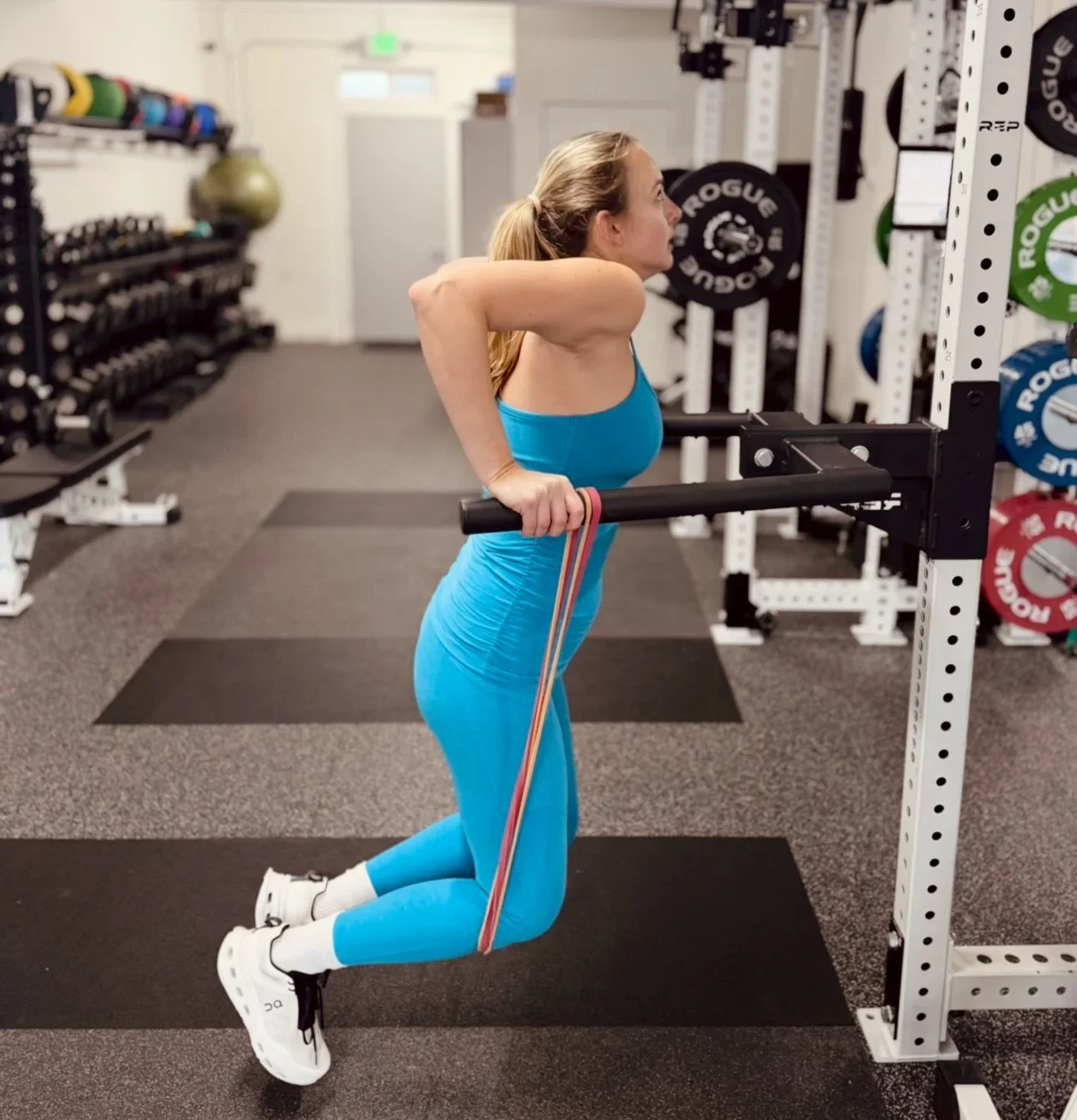
Strengthening your Pelvic Floor During Your First & Second Trimester
The pelvic floor works in synergy with the respiratory diaphragm by implementing eccentric relaxation during inhalation and concentric contraction during exhalation
Relax the pelvic floor muscles as you inhale
Engage the pelvic floor muscles as you exhale 1. Inhale: Pelvic floor goes down, 2. Exhale: Pelvic floor goes up
How to perform a pelvic floor muscle contraction: 1. Imagine an elevator lifting your pelvic floor from the first floor to the second and third floor, then holding it for at least 5-7 seconds before relaxing 2. Think about pulling your underwear in 3. Think about bringing your sit bones together and lifting your perineum off the chair
Perform at least 30-80 reps per day with the goal of holding each contraction for 10 seconds
If you’re unable to hold for 10 seconds, begin with 3-second holds and work your way up
Perform functional activity training to mimic daily life activities and situations: squeeze your pelvic floor before you cough or sneeze to train yourself to prevent any leakage
Please reach out for further guidance or to schedule an appointment with a physical therapist. For more on PT for birth preparation, check out the other parts of this series.
DISCLAIMER
The information provided in this blog is for educational and informational purposes only and is not intended as medical or training advice. The Fatigability Score is an estimation tool based on practical training variables and should not replace individualized coaching, medical assessment, or evidence-based recovery protocols. Always consult with a qualified fitness professional or healthcare provider before making significant changes to your exercise program.